

Why do men undergo colorectal cancer screenings less often than women?
Men are more likely to develop colorectal cancer, but they are less likely to undergo screening. Find out why this is the case and how modern screening can help.

Why colorectal cancer often causes no symptoms—and why that’s exactly why screening is so important
Colon cancer often goes unnoticed in its early stages. Learn why screening is crucial, what role the FIT test plays, and when the first symptoms appear.

Colorectal Cancer at a Young Age—Why the Number of Cases Among People Under 50 Is Rising
More and more people under the age of 50 are being diagnosed with colorectal cancer. Learn about the possible causes, the key symptoms, and how you can reduce your risk.

The FIT Test Explained: What Happens to Your Stool Sample?
What happens to your stool sample after a FIT test? Learn how the lab analysis works, what is measured, and when you'll receive your results.
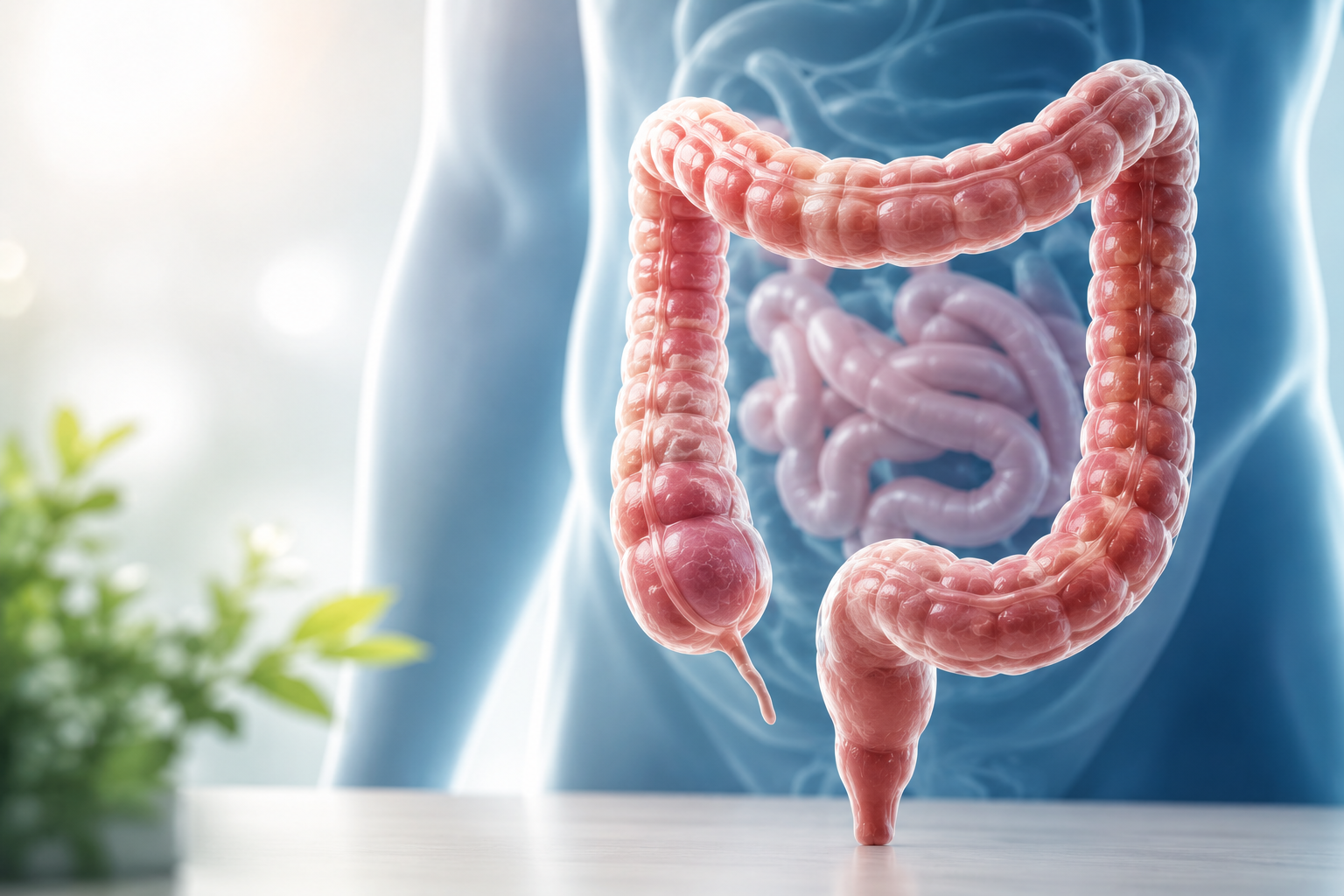
Understanding Colon Cancer: Causes, Symptoms, Prevention, and Modern Early Detection with the FIT Test
Colon cancer often goes unnoticed for a long time. Learn about the key causes and symptoms, how to prevent it, and how WePrevent’s FIT test makes it easy to screen for colon cancer from home.

Preventing Colon Cancer: How You Can Reduce Your Personal Risk
How can you reduce your risk of colorectal cancer? Learn about the role of diet, exercise, alcohol, smoking, and screening—and how WePrevent’s FIT test can help.

Digestive Problems Caused by Stress—Why the Stomach Is the First to React to Psychological Stress
Exams, work pressure, conflicts, or constant tension—stress is a part of modern daily life. However, many people feel psychological strain not only in their heads but especially in their stomachs: bloating, diarrhea, constipation, gas, or stomach pain are typical symptoms. Why does the gut react so sensitively to stress? The answer lies in a close biological connection between the brain and the digestive system—the so-called gut-brain axis. Through nerves, hormones, and neurotransmitters, both systems are in constant communication. The gut is therefore often the first organ to react to psychological stress.

Colon Cancer Screening with a Stool Test or Colonoscopy—Which Is Best, and When?
Colon cancer is one of the most common types of cancer, but it is also one of the most preventable. Regular screening is crucial, because tumors and their precursor lesions develop over many years—often without noticeable symptoms.
Two methods are central to this: the immunological stool test (FIT test) and colonoscopy. Both share a common goal but differ in terms of complexity, accessibility, and scope of application. This article provides a clear overview of which method is suitable for whom, the advantages of the FIT test—and why low-threshold screening is a crucial step toward improving public health.

The Role of Sleep in Our Gut Health—Why a Good Night's Sleep Is So Important for Our Gut
Many people know that diet and exercise affect gut health. But one factor is often underestimated: sleep. The quality of our sleep has a direct impact on our digestion, our immune system, and our microbiome. At the same time, the gut influences how restful our sleep is through hormones and neurotransmitters. This shows that the gut and sleep are closely interconnected.

From Gut Feeling to Diagnosis—When Gut Problems Should Be Taken Seriously
A bloated stomach after eating, mild pain, irregular bowel movements—many people are familiar with these symptoms. They’re often attributed to stress, diet, or eating the “wrong” lunch. In most cases, that’s true: The gut is sensitive to lifestyle, hormones, and mental health. But what if these symptoms keep coming back or persist over a long period of time?

How Sugar, Alcohol, and Processed Foods Weaken the Gut
Our diet has a huge impact on our health—especially on our gut. It’s not only responsible for digestion, but it’s also a key organ of the immune system and crucial for overall metabolic balance. But what happens when our daily diet consists of too much sugar, alcohol, and highly processed foods?

Silent Inflammation in the Body—How It Develops and What the Gut Has to Do With It
Not all inflammation is accompanied by pain or fever. In many people, so-called “silent inflammation” smolders for years—unnoticed, but with far-reaching consequences for health. These chronic, low-grade inflammatory processes are now considered a key risk factor for cardiovascular disease, diabetes, neurodegenerative diseases, and even cancer. An organ that is often underestimated plays a crucial role in the development and prevention of such inflammation: the gut.

Mikrobiom – Das unterschätzte Organ in unserem Darm
Ein gesunder Darm ist die Grundlage für ein gesundes Leben – dieser Satz gewinnt in der medizinischen Forschung zunehmend an Bedeutung. Im Zentrum steht dabei ein faszinierendes System: das Mikrobiom. Es besteht aus Billionen von Mikroorganismen, die in unserem Verdauungstrakt leben und dort eine zentrale Rolle für unsere Gesundheit spielen. Lange wurde es kaum beachtet – heute gilt es als Schlüsselakteur in der Prävention zahlreicher Krankheiten.
In diesem Artikel erfahren Sie, was das Mikrobiom ist, welche Funktionen es erfüllt, wie Sie es aktiv stärken können – und welche Rolle moderne Mikrobiom-Analysen in der Vorsorgemedizin spielen.

7.11.2024 Magen-Darm-Tag: Tipps und Tricks für eine gesunde Verdauung
Heute ist Magen-Darm-Tag! Ein guter Anlass, um auf die Gesundheit unseres Verdauungssystems zu achten und ihm etwas Gutes zu tun. Der Magen-Darm-Trakt ist ein wesentlicher Teil unseres Körpers, denn er versorgt uns mit den notwendigen Nährstoffen und unterstützt unser Immunsystem. Hier sind einige Tipps und Tricks, wie du deine Verdauung unterstützen und für ein gutes Bauchgefühl sorgen kannst.

Darmgesundheit und Bewegung: Wie Sport das Risiko von Darmkrebs senkt
Eine ausgewogene Ernährung und regelmäßige Vorsorgeuntersuchungen sind wichtige Komponenten der Gesundheitsvorsorge, doch eine oft unterschätzte Rolle spielt die körperliche Aktivität. Studien zeigen, dass Bewegung nicht nur das allgemeine Wohlbefinden fördert, sondern auch einen signifikanten Einfluss auf die Darmgesundheit hat und das Risiko von Darmkrebs verringern kann. In diesem Blogbeitrag erfahren Sie, wie Sport die Gesundheit Ihres Darms unterstützt und welche Aktivitäten besonders vorteilhaft sind.

Mythen und Fakten über Darmkrebs und seine Prävention
Darmkrebs gehört zu den häufigsten Krebserkrankungen weltweit und betrifft Menschen in verschiedenen Altersgruppen. Trotz der fortschrittlichen Forschung und der verfügbaren Informationen gibt es viele Mythen und Missverständnisse über Darmkrebs und seine Prävention. In diesem Blogbeitrag möchten wir einige der häufigsten Mythen aufklären und durch Fakten ersetzen, um ein besseres Verständnis für diese Erkrankung zu schaffen.

Der Volkswirtschaftliche Nutzen von Darmkrebs-Screenings
Darmkrebs zählt weltweit zu den häufigsten Krebserkrankungen. Trotz seiner hohen Prävalenz kann Darmkrebs durch frühzeitige Erkennung und Behandlung oft erfolgreich bekämpft werden. Die volkswirtschaftlichen Vorteile von Darmkrebs-Screenings sind vielfältig und betreffen sowohl die direkten als auch die indirekten Kosten im Gesundheitswesen. In diesem Beitrag beleuchten wir die verschiedenen Aspekte des volkswirtschaftlichen Nutzens von Darmkrebs-Screenings.

Kosteneinsparungen durch Früherkennung: Der FIT-Test als effektives Darmkrebs-Screening
Darmkrebs ist eine ernsthafte Erkrankung, die weltweit zunimmt. Die gute Nachricht ist, dass es viele Maßnahmen gibt, die jeder ergreifen kann, um das Risiko der Entstehung von Darmkrebs zu reduzieren. In diesem Blogbeitrag werden wir uns darauf konzentrieren, wie man durch eine gesunde Lebensweise Darmkrebs vorbeugen kann.

Ein Blick auf die verschiedenen Arten von Darmkrebs: Diagnose, Symptome und Behandlung
Darmkrebs ist eine ernste Erkrankung, die verschiedene Teile des Dickdarms oder Rektums betreffen kann. In diesem Blogbeitrag werden wir einen genaueren Blick auf die verschiedenen Arten von Darmkrebs werfen, ihre unterschiedlichen Merkmale, Symptome sowie Ansätze zur Diagnose und Behandlung.

Darmkrebs-Risiko: Wer sollte besonders aufmerksam sein?
Darmkrebs ist eine ernste Erkrankung, die Menschen jeden Alters betreffen kann. Allerdings gibt es bestimmte Gruppen, die ein erhöhtes Risiko für die Entwicklung von Darmkrebs haben. In diesem Blogbeitrag werden wir genauer darauf eingehen, wer besonders aufmerksam sein sollte und welche Faktoren das Risiko beeinflussen.