

Why do men undergo colorectal cancer screenings less often than women?
Men are more likely to develop colorectal cancer, but they are less likely to undergo screening. Find out why this is the case and how modern screening can help.

Why colorectal cancer often causes no symptoms—and why that’s exactly why screening is so important
Colon cancer often goes unnoticed in its early stages. Learn why screening is crucial, what role the FIT test plays, and when the first symptoms appear.

Colorectal Cancer at a Young Age—Why the Number of Cases Among People Under 50 Is Rising
More and more people under the age of 50 are being diagnosed with colorectal cancer. Learn about the possible causes, the key symptoms, and how you can reduce your risk.

The FIT Test Explained: What Happens to Your Stool Sample?
What happens to your stool sample after a FIT test? Learn how the lab analysis works, what is measured, and when you'll receive your results.
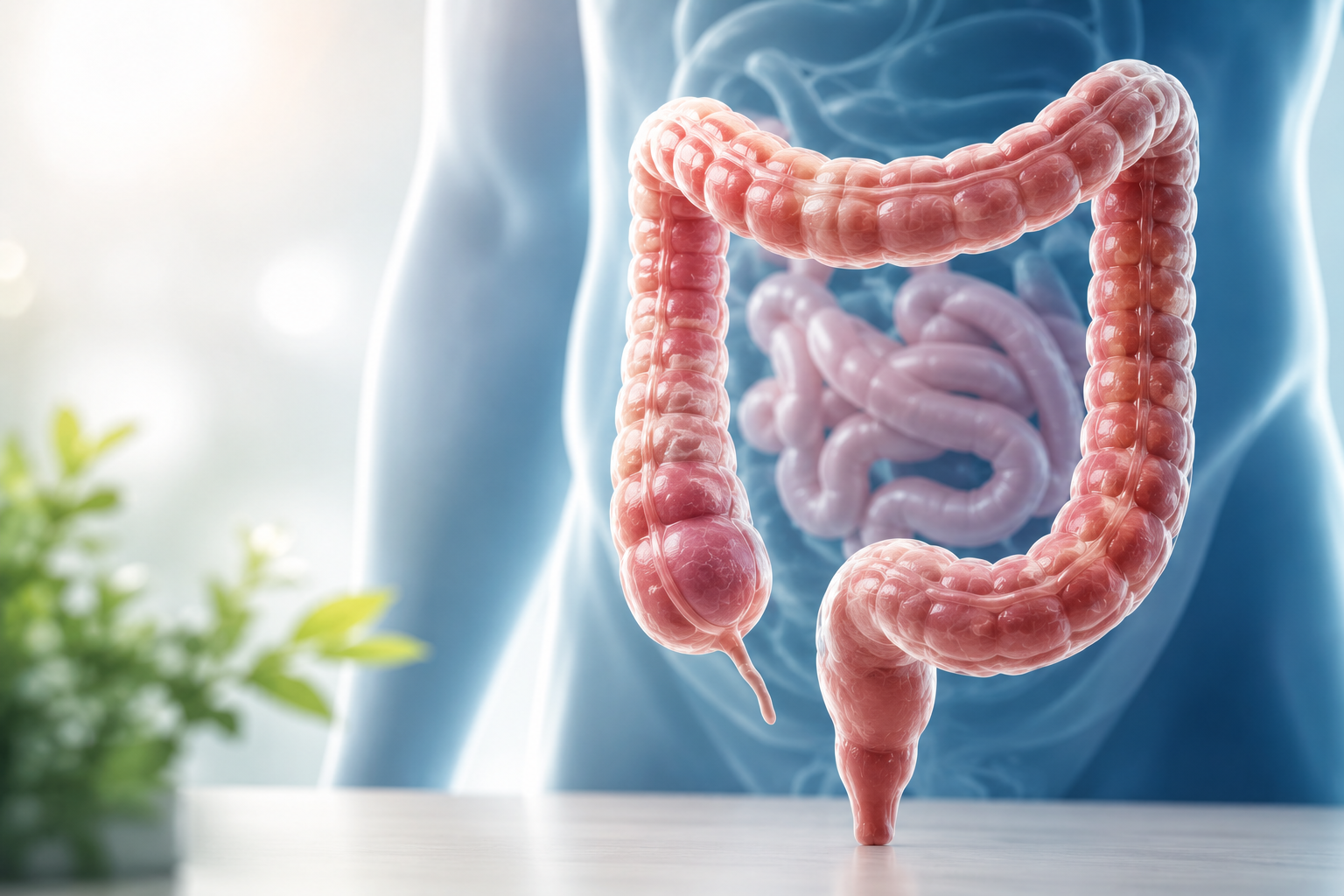
Understanding Colon Cancer: Causes, Symptoms, Prevention, and Modern Early Detection with the FIT Test
Colon cancer often goes unnoticed for a long time. Learn about the key causes and symptoms, how to prevent it, and how WePrevent’s FIT test makes it easy to screen for colon cancer from home.

Preventing Colon Cancer: How You Can Reduce Your Personal Risk
How can you reduce your risk of colorectal cancer? Learn about the role of diet, exercise, alcohol, smoking, and screening—and how WePrevent’s FIT test can help.

Digestive Problems Caused by Stress—Why the Stomach Is the First to React to Psychological Stress
Exams, work pressure, conflicts, or constant tension—stress is a part of modern daily life. However, many people feel psychological strain not only in their heads but especially in their stomachs: bloating, diarrhea, constipation, gas, or stomach pain are typical symptoms. Why does the gut react so sensitively to stress? The answer lies in a close biological connection between the brain and the digestive system—the so-called gut-brain axis. Through nerves, hormones, and neurotransmitters, both systems are in constant communication. The gut is therefore often the first organ to react to psychological stress.

Gut Health and Heart Health—How the Gut Affects Our Cardiovascular Risk
Cardiovascular diseases are among the leading causes of death worldwide. Classic risk factors such as high blood pressure, high cholesterol, diabetes, smoking, and a lack of physical activity are well known. Less well known, however, is a factor that is increasingly becoming the focus of research: the gut microbiome. Recent studies show that the composition of our gut flora can have a direct impact on inflammatory processes, cholesterol metabolism, and vascular health. This means that gut health and heart health are more closely linked than was long assumed.

Family Health Planning: Working Together to Prevent Diabetes
Type 2 diabetes is often viewed as an individual condition. In reality, however, the risk rarely arises in isolation—rather, it develops within the context of everyday family life. Eating habits, physical activity, screen time, stress, and sleep patterns are usually shaped together. This is precisely where a major lever for prevention lies: Diabetes prevention works particularly well when it is approached and practiced as a family. Family-based prevention does not mean sacrifice or control, but rather shared routines, playful motivation, and long-term health literacy—for children as well as adults.

Early Warning System for Prediabetes – Identifying the Risk Before It Develops Into Diabetes
Type 2 diabetes mellitus usually does not develop suddenly. In the vast majority of cases, the disease is preceded by a long, silent preliminary phase: prediabetes. This is precisely where modern preventive care offers a great opportunity. Those who identify risks early and take timely action can often prevent the onset of diabetes or significantly delay it. But what exactly is prediabetes? How often does it go undiagnosed? And which tests help identify risks early on? This article provides a structured overview—from the definition and symptoms to effective screening strategies.

Colon Cancer Screening with a Stool Test or Colonoscopy—Which Is Best, and When?
Colon cancer is one of the most common types of cancer, but it is also one of the most preventable. Regular screening is crucial, because tumors and their precursor lesions develop over many years—often without noticeable symptoms.
Two methods are central to this: the immunological stool test (FIT test) and colonoscopy. Both share a common goal but differ in terms of complexity, accessibility, and scope of application. This article provides a clear overview of which method is suitable for whom, the advantages of the FIT test—and why low-threshold screening is a crucial step toward improving public health.

Type 2 Diabetes and the Microbiome—How Gut Flora, Metabolism, and Blood Sugar Are Linked
The human gut is much more than just a digestive organ. It is a highly complex ecosystem in which trillions of microorganisms live and together form a delicate balance: the microbiome.
In recent years, research has shown that this microbiome not only affects digestion and the immune system, but also plays a central role in energy metabolism.

The Gut and the Skin—What Acne, Eczema, and Rosacea Have to Do with the Microbiome
Our skin is often described as a mirror of the soul—but also as a mirror of the gut. Pimples, redness, eczema, or itching are often more than just a cosmetic issue. They can be a sign of internal imbalances, particularly in the digestive system. Recent scientific findings confirm that there is a close connection between the gut and the skin—the so-called gut-skin axis.

The Role of Sleep in Our Gut Health—Why a Good Night's Sleep Is So Important for Our Gut
Many people know that diet and exercise affect gut health. But one factor is often underestimated: sleep. The quality of our sleep has a direct impact on our digestion, our immune system, and our microbiome. At the same time, the gut influences how restful our sleep is through hormones and neurotransmitters. This shows that the gut and sleep are closely interconnected.

Gut Health in Everyday Work Life—Why Prevention Starts in the Office
Modern work life demands a lot from us: sitting for hours on end, quick meals between appointments, intense pressure to perform, and too little physical activity. What many people forget is that our gut reacts sensitively to precisely these factors. It is not only the center of digestion but also a key organ for our immune system, our energy, and our well-being. If you want to stay healthy, productive, and focused in the long term, you should pay attention to your gut even at work—because gut health isn’t just a private matter; it begins where we spend most of our day: at the office.

From Gut Feeling to Diagnosis—When Gut Problems Should Be Taken Seriously
A bloated stomach after eating, mild pain, irregular bowel movements—many people are familiar with these symptoms. They’re often attributed to stress, diet, or eating the “wrong” lunch. In most cases, that’s true: The gut is sensitive to lifestyle, hormones, and mental health. But what if these symptoms keep coming back or persist over a long period of time?

How Sugar, Alcohol, and Processed Foods Weaken the Gut
Our diet has a huge impact on our health—especially on our gut. It’s not only responsible for digestion, but it’s also a key organ of the immune system and crucial for overall metabolic balance. But what happens when our daily diet consists of too much sugar, alcohol, and highly processed foods?

Silent Inflammation in the Body—How It Develops and What the Gut Has to Do With It
Not all inflammation is accompanied by pain or fever. In many people, so-called “silent inflammation” smolders for years—unnoticed, but with far-reaching consequences for health. These chronic, low-grade inflammatory processes are now considered a key risk factor for cardiovascular disease, diabetes, neurodegenerative diseases, and even cancer. An organ that is often underestimated plays a crucial role in the development and prevention of such inflammation: the gut.

The Gut-Brain Axis: How the Gut Influences Our Mental Health
Research on the human gut has made tremendous strides in recent years—and has yielded some astonishing findings. One of the most fascinating discoveries: There is a close connection between our brain and our gut that has a profound impact on our mental well-being. This so-called gut-brain axis is the focus of numerous current studies that show: Our mood, our stress resilience, and even the development of mental illnesses are closely linked to the state of our gut—especially our microbiome.

The Gut—The Center of Our Health and Immune System
Modern medicine is increasingly recognizing what many holistic approaches have long suspected: A healthy gut is the foundation of a healthy life. Our digestive system is far more than just a “processing machine” for food—it is a highly complex control center for the immune system, metabolism, hormone production, and even our mental health. Anyone who wants to stay healthy in the long term should therefore regularly monitor their gut health.